ATOM
Re-engineering of a web platform that manages and runs automated omics analyses (RNA-seq), from a fragile monolith to a reproducible architecture with clear separation of concerns.
- Year
- 2026
- My role
- Author: analysis, architecture and implementation
- Category
- Scientific platform · Final degree project
01Context
Individual academic project · ULPGC · graded 9.4/10.
Re-engineering of a web platform that manages and runs automated omics analyses (RNA-seq), from a fragile monolith to a reproducible architecture with clear separation of concerns.
02Problem
The previous version was a Flask monolith that stored data in JSON files and ran R Markdown scripts straight from the web server. It worked, but had serious limits in security, maintainability, scalability, traceability and reproducibility.
03Goals
- Analyse and document the previous architecture and its risks.
- Separate the backend, the execution system and the analysis layer.
- Make executions reproducible and traceable.
- Improve security, data validation and user management.
04My contribution
- Analysis of the previous system and design of the new architecture.
- FastAPI backend: authentication, users, projects, entities, notifications and execution tracking.
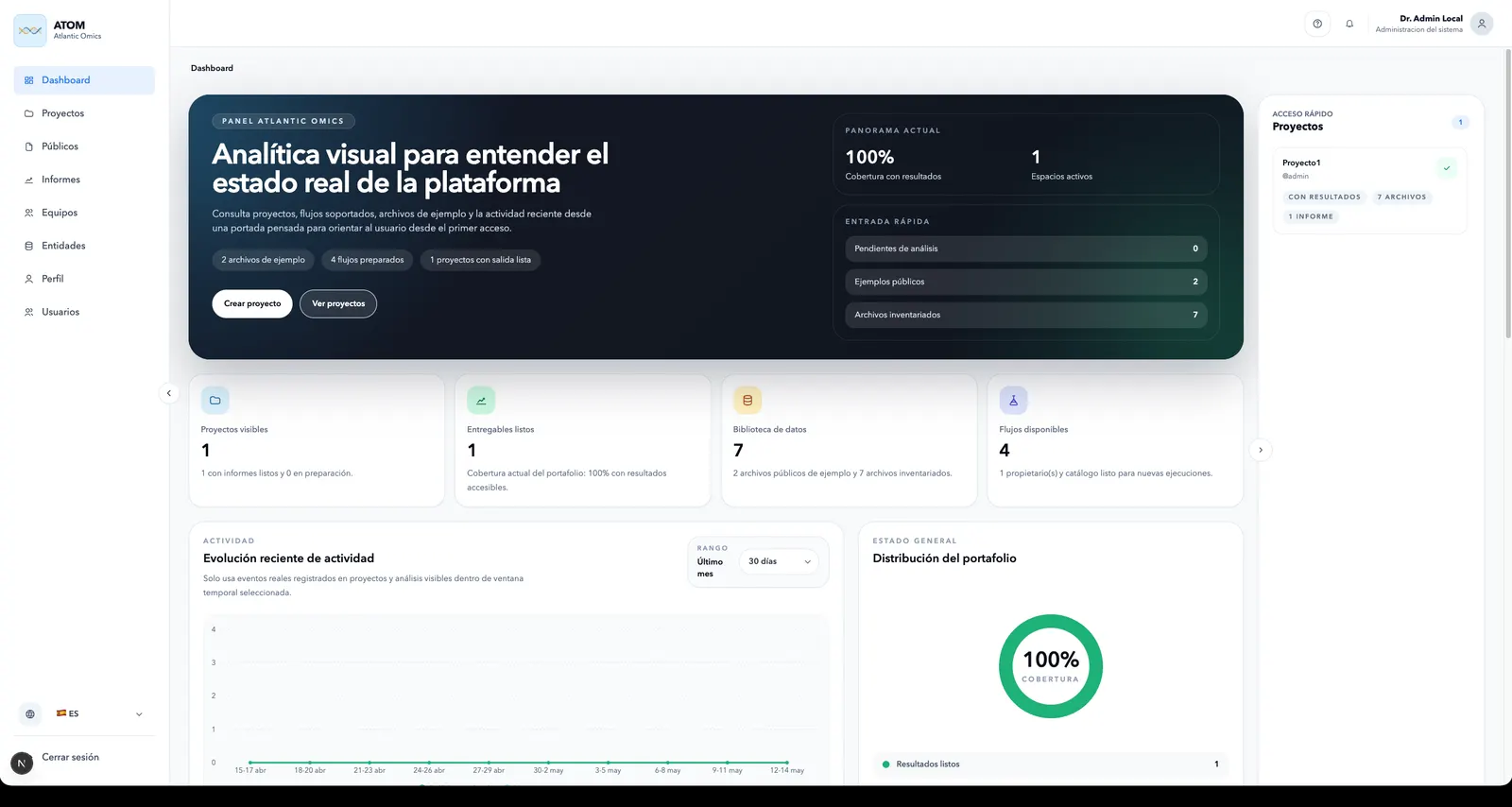
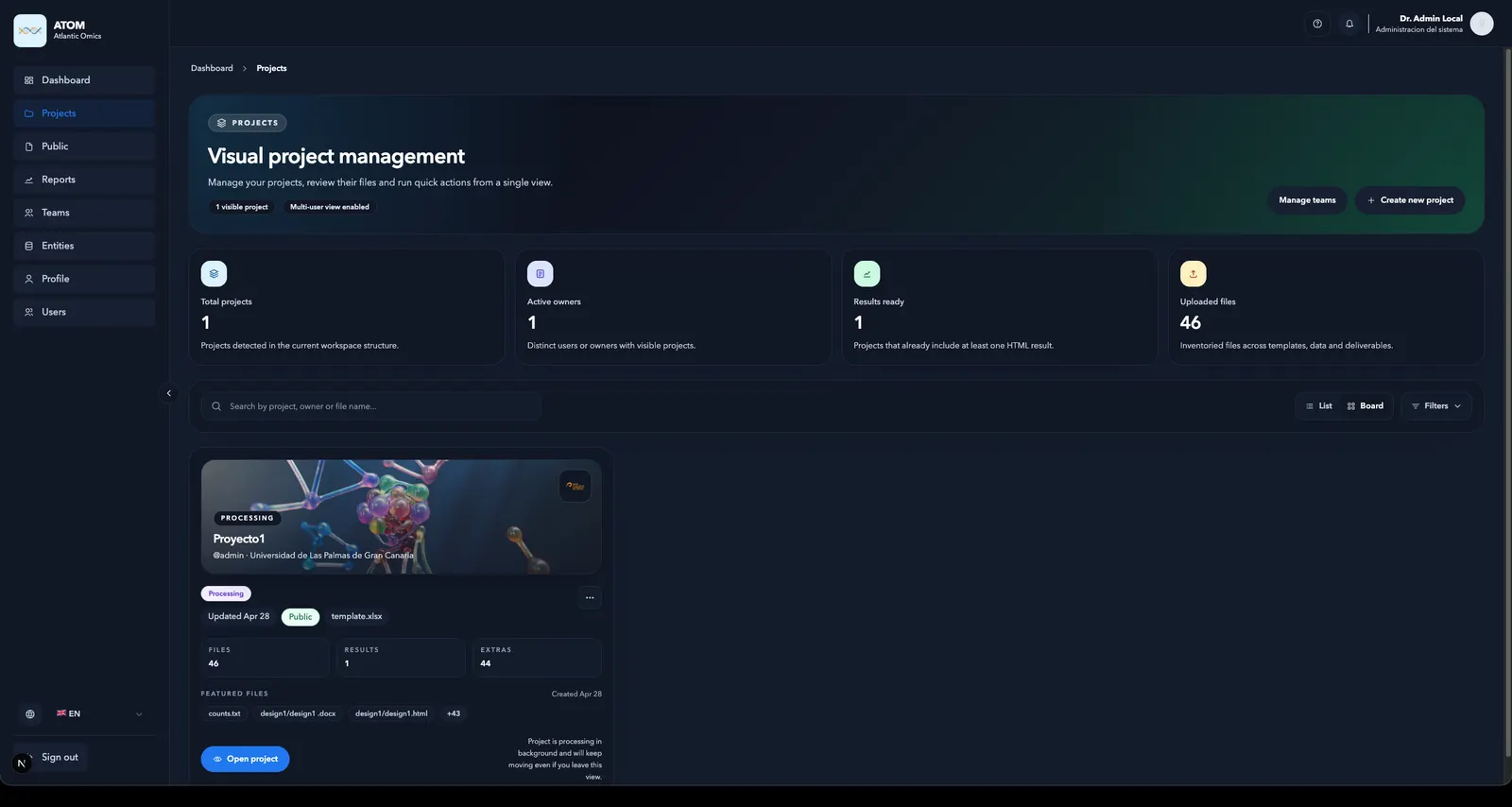
- Next.js frontend with a dashboard, visual project management and reports.
- PostgreSQL data model and migration from JSON files.
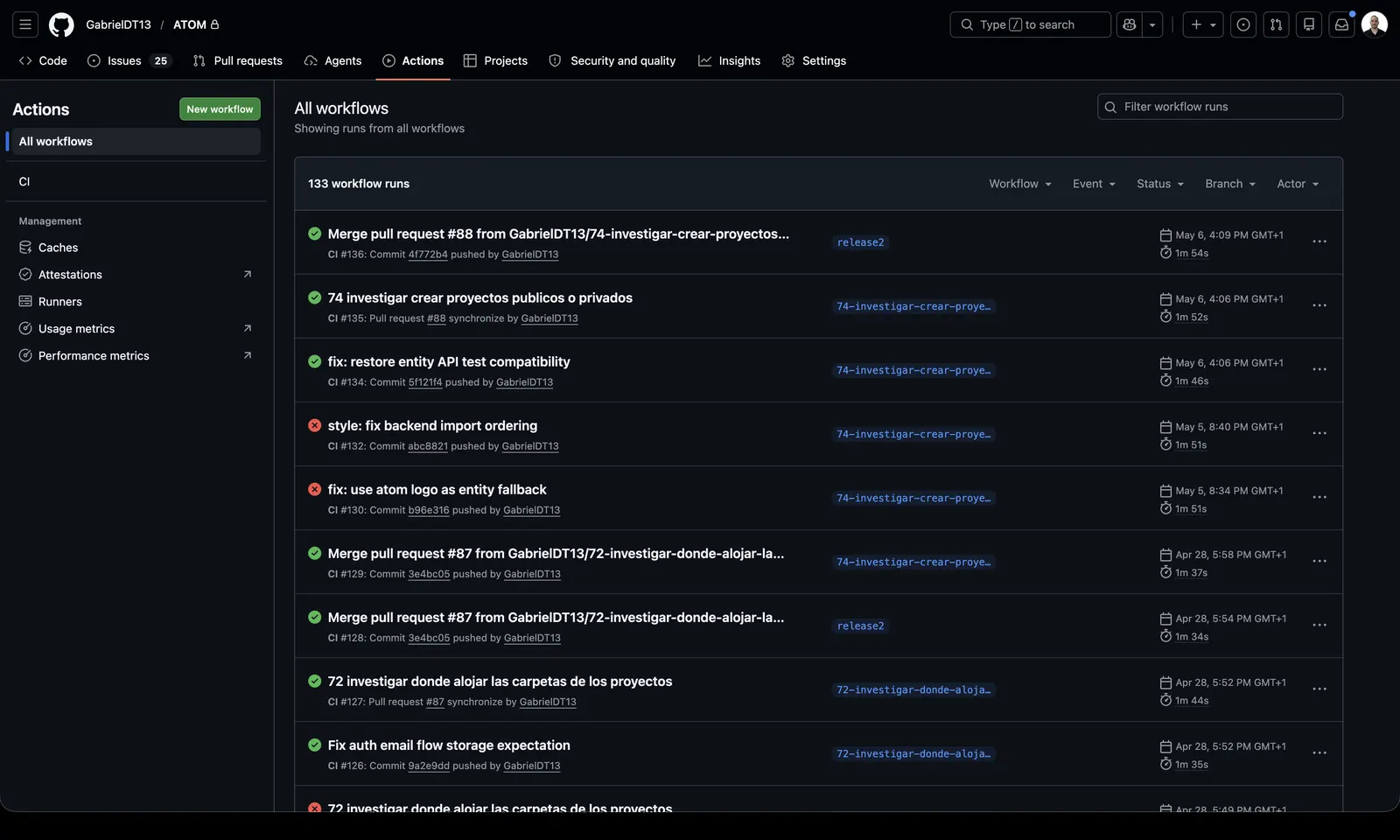
- Asynchronous worker, Docker containers and continuous integration.
05Technical decisions
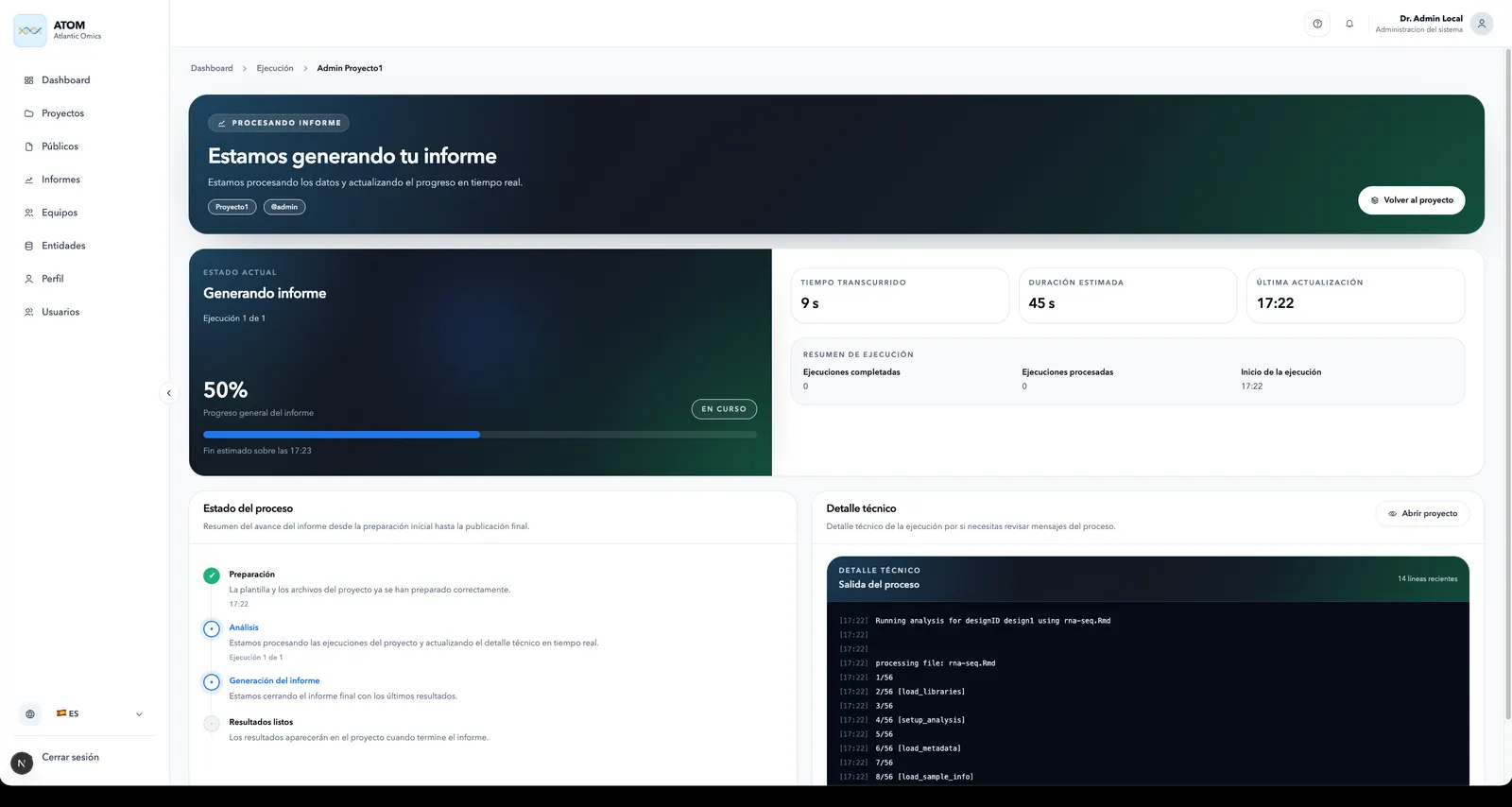
- AMoving analysis execution out of the web server into an independent worker: the UI never blocks and every run is recorded with its state.
- BPostgreSQL instead of JSON files for integrity, querying and a real history of projects and runs.
- CDocker so the analysis environment, with its R and Python dependencies, is identical on any machine.
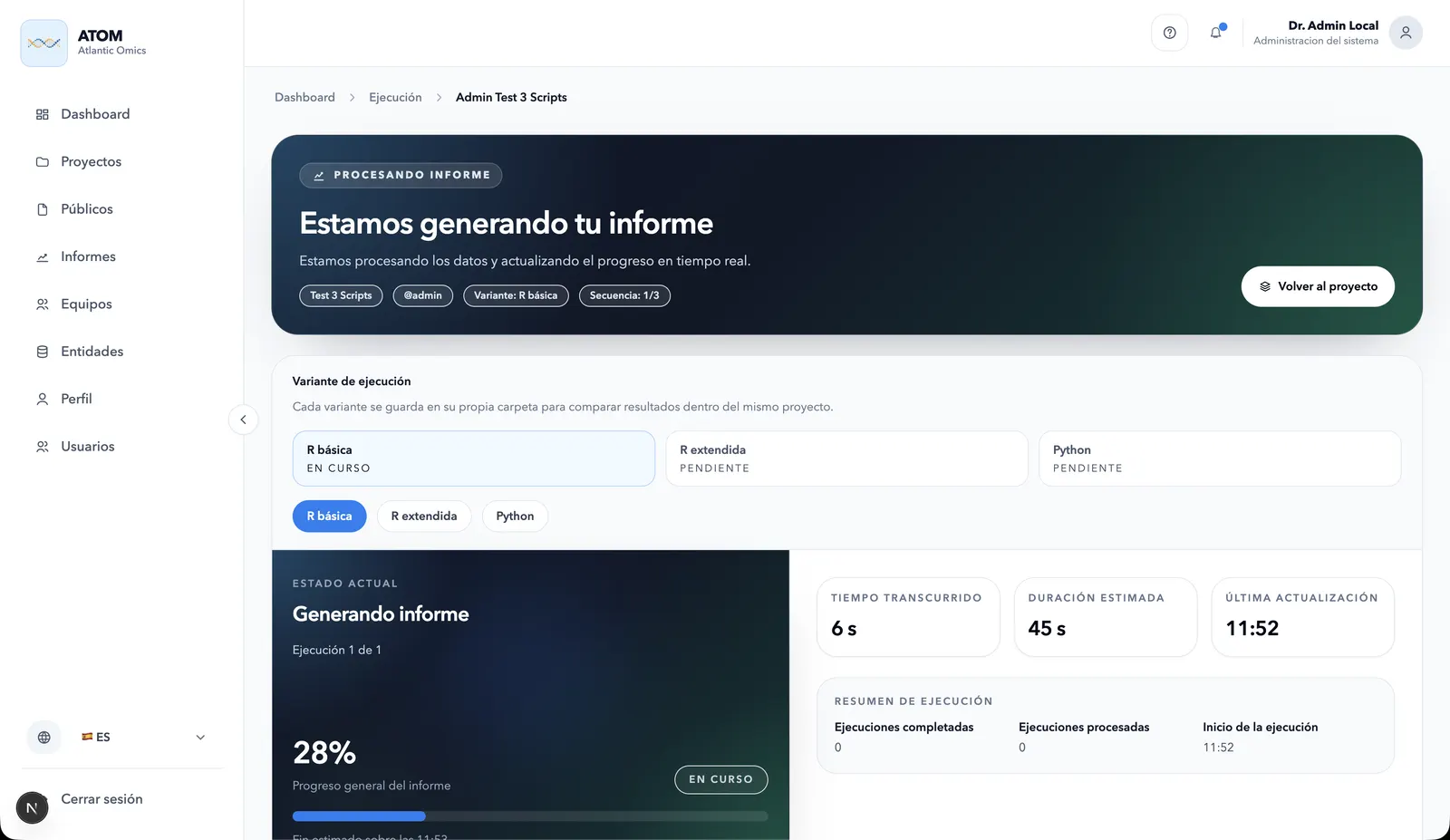
- DAutomatic validation of experimental templates before an analysis starts, so it fails early and with a clear message.
06Solution
A new architecture with a FastAPI backend, a Next.js frontend, PostgreSQL persistence, Docker orchestration and an independent worker process that runs analyses in the background.
Key features
- Omics project management
- Experimental template validation
- Asynchronous runs with live tracking
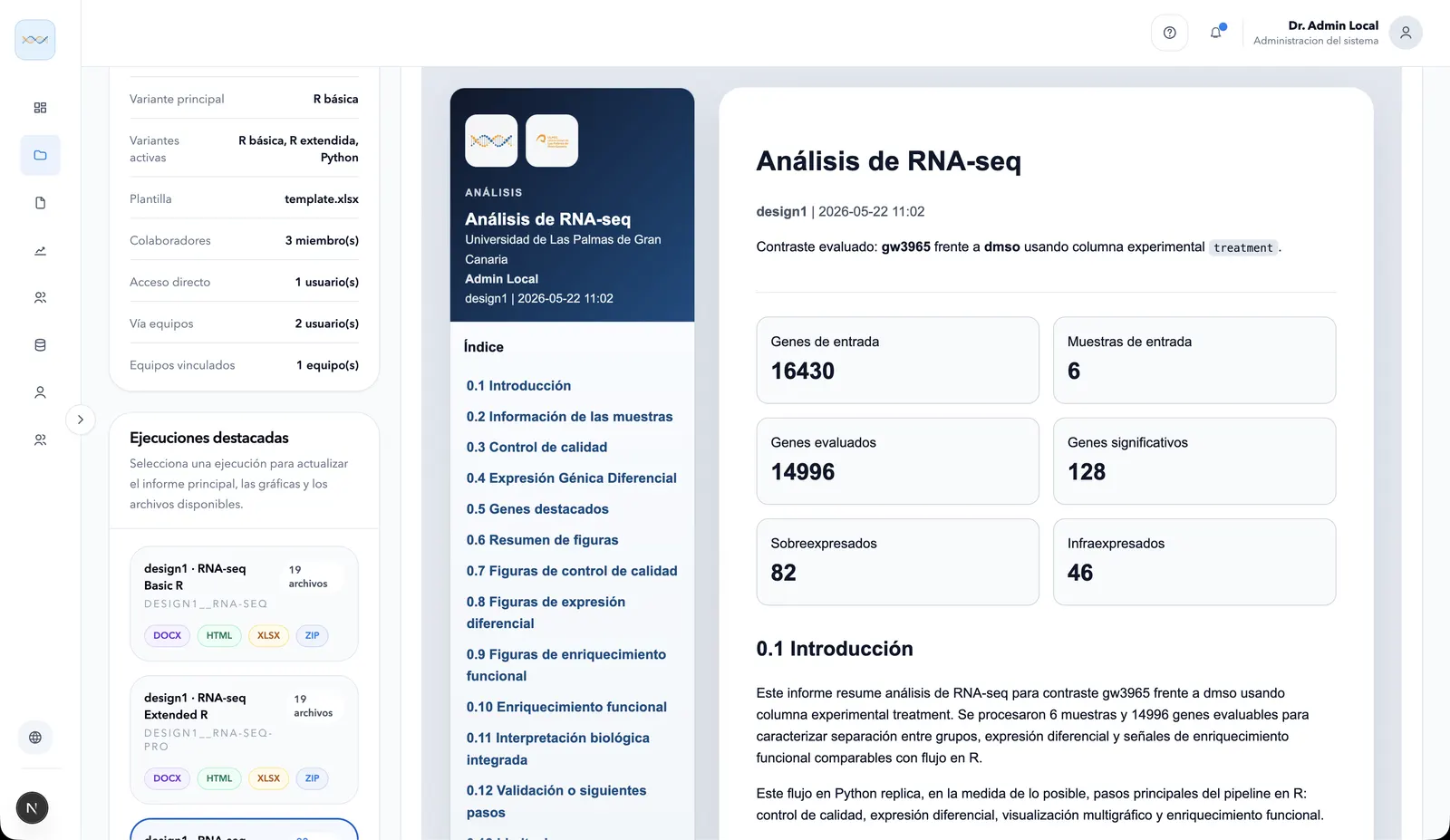
- HTML, DOCX and XLSX reports
- History and traceability
- Light and dark mode
Outcome
Final degree project graded 9.4/10 (Outstanding) in the BSc in Computer Engineering at ULPGC.
07Screenshots
08Stack
- FastAPI
- Python
- Next.js
- TypeScript
- PostgreSQL
- Docker
- R Markdown
- GitHub Actions
09What I learned
- “Reproducibility is not an extra, but a basic condition of scientific software.” That was the guiding idea of the project.
- Rewriting well means first understanding why the old system worked, not only where it failed.
10Links
Private project: there is no public demo or open repository.